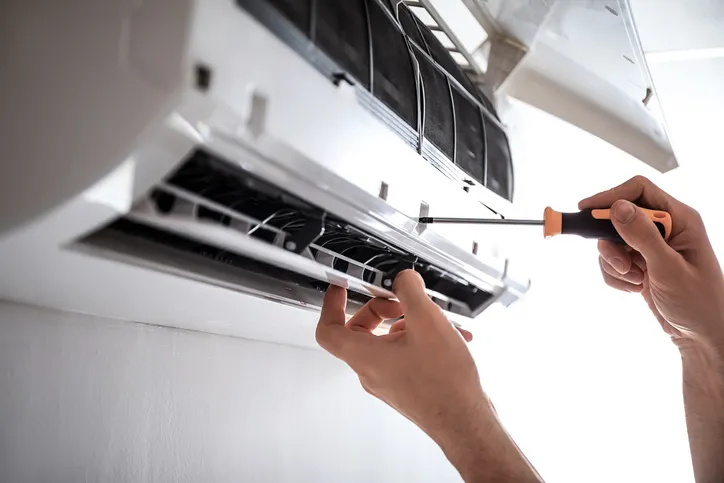
Mitsubishi mini splits are trusted for quiet operation and efficient zoned heating and cooling. Still, like any HVAC equipment, they can develop faults that reduce comfort and raise energy use. This guide walks through the most frequent issues homeowners see, explains what causes them, and offers practical steps to troubleshoot or fix the problem. With a little attention and timely service, you can keep your system running smoothly.
Why Is My Mitsubishi Mini Split Not Cooling?
When your Mitsubishi mini split isn’t cooling as it should, the result is uncomfortable rooms and longer run times. Most cooling problems come down to airflow, refrigerant charge, or control issues. Pinpointing which of those is at fault directs an effective fix and helps avoid repeat visits from a technician.
What Causes Mini Split AC Not Cooling?
A few common faults usually explain inadequate cooling:
- Refrigerant Leaks : Low refrigerant reduces heat transfer and performance—often from a slow leak or failed fitting.
- Clogged Filters : Dirty filters choke airflow, forcing the system to work harder with less result.
- Thermostat Issues : Faulty sensors or incorrect settings can prevent the unit from reaching the set temperature.
Recognizing these causes helps you decide whether a simple user-level fix will do or if professional service is required.
How Do You Fix Cooling Problems in Mitsubishi Mini Splits?
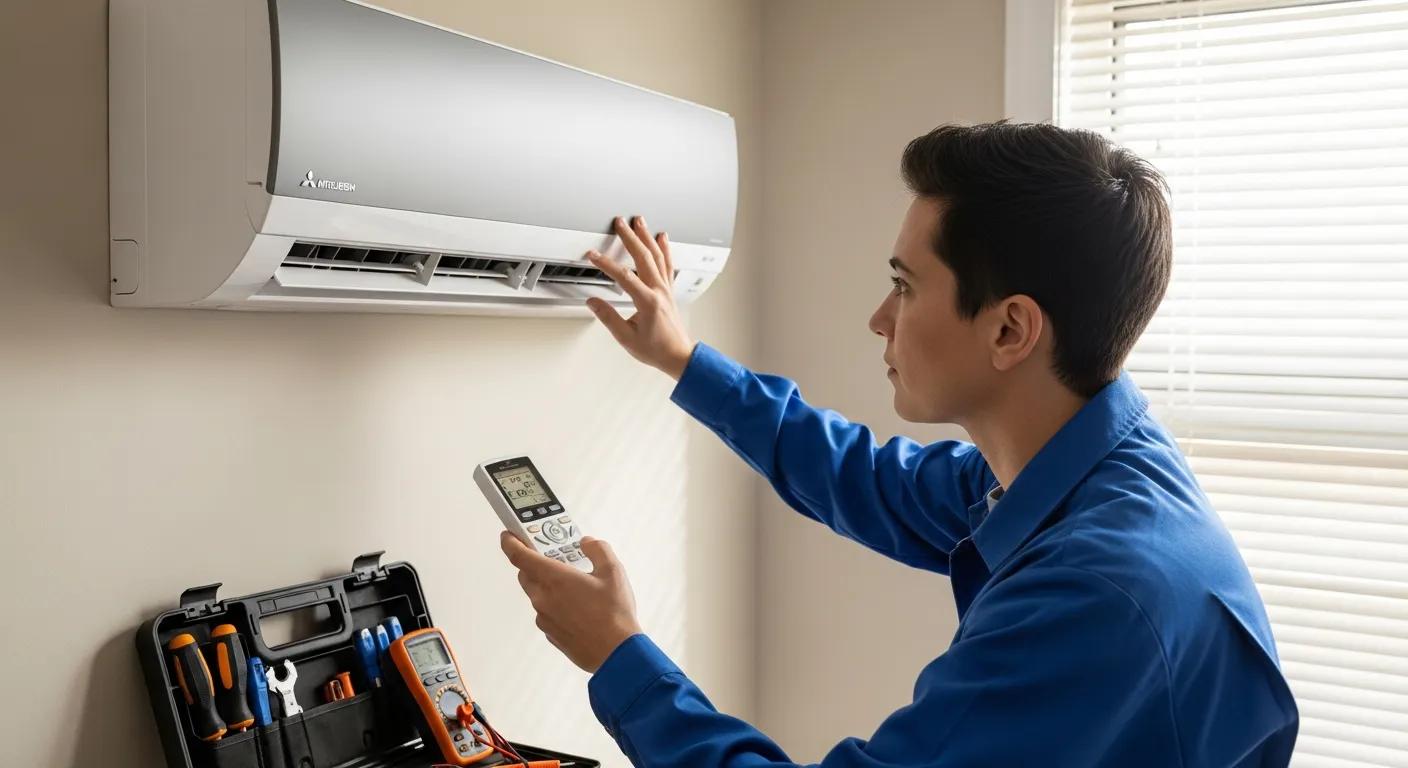
Try these steps to restore cooling before calling out a technician:
- Check Refrigerant Levels : Visible leaks or poor cooling often mean low refrigerant. Have a certified tech find the leak and recharge the system—this is not a DIY job.
- Clean or Replace Filters : Rinse or swap filters per the owner’s manual. Clean filters improve airflow and immediate performance.
- Inspect the Thermostat : Confirm the controller is set correctly and responding. Replace batteries and verify the temperature sensor isn’t blocked.
If these actions don’t fix the issue, schedule a professional diagnostic to avoid further damage.
How Do You Troubleshoot Common Ductless Mini Split Issues?
A steady, methodical check will catch most common faults. Start with the obvious and work toward more technical checks.
- Inspect the Outdoor Unit : Remove debris, ensure good clearance, and confirm the fan and coils are unobstructed.
- Check for Error Codes : Many Mitsubishi units report error codes on the indoor display—look up codes in the manual to guide repairs.
- Listen for Unusual Noises : New grinding, rattling, or hissing sounds point to mechanical or refrigerant issues that need attention.
Working through these checks will often reveal whether a simple clean-up will help or a technician is needed.
Catching faults early matters: many cooling systems lose significant efficiency from undetected component failures.
Ductless Split Fault Detection & Repairfor EnergySavings
1. Cooling systems account for roughly 40% of a building’s energy use, and about 40% of that can be wasted when parts fail or behave anomalously. The authors describe a three-stage, non-invasive method to detect part-level faults in both centralized and ductless systems using commercial sensors to monitor temperature and energy. After identifying anomalies, the approach diagnoses the likely cause and recommends targeted fixes—helping technicians reduce repair time and cost. Detecting faults in the cooling systems by monitoring temperature and energy, K Kaushik, 2024
Which Diagnostic Steps Identify Mini Split Compressor Problems?
The compressor is critical; when it’s failing, symptoms are usually obvious. Use careful observation to confirm compressor trouble before considering a full replacement.
- Listen for Unusual Sounds : Grinding, loud rattles, or irregular humming often come from a failing compressor or loose internal parts.
- Check for Overheating : An unusually hot compressor or short cycling can indicate internal stress or electrical faults.
- Monitor System Performance : Weak or inconsistent cooling, long run times, or frequent trips can point to compressor degradation.
When these signs appear, stop extended operation and call a qualified HVAC technician to diagnose and repair the compressor safely.
How to Reset and Maintain Your Mitsubishi Mini Split System?
Routine upkeep keeps systems reliable. Below are basic reset and maintenance actions you can perform safely at home and items to leave to pros.
- Reset the System : For minor glitches, power the unit off at the remote or breaker, wait a few minutes, then restart. If fault codes return, record them for your technician.
- Schedule Regular Maintenance : Have a trained technician service the unit annually to check refrigerant, clean coils, and inspect electrical connections.
- Keep the Area Clean : Maintain clear space around indoor and outdoor units so airflow isn’t restricted and so technicians can access components easily.
Regular attention prevents many common failures and keeps your mini split operating efficiently for years.
What Are the Signs and Fixes for Mini Split Water Leaks?
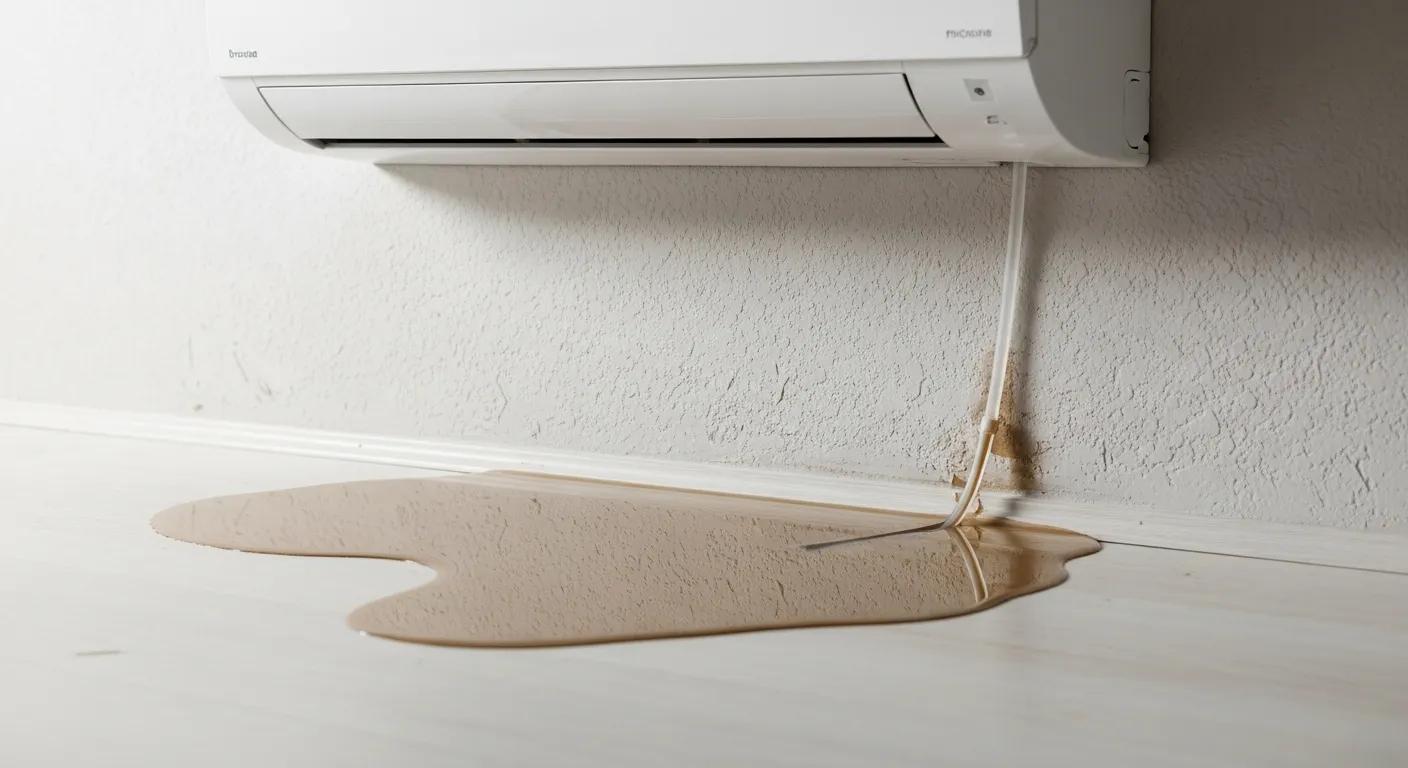
Water leaks can damage walls and ceilings if left unchecked. Watch for these common indicators and the straightforward remedies that follow.
- Puddles Around the Unit : Standing water under the indoor unit usually means a blocked drain or failed pump.
- Increased Humidity : Excess moisture in the room can signal poor drainage or coil freezing.
- Water Stains : Discoloration on walls or ceilings near the unit often points to a slow or recurring leak.
What Causes Water Leaks in Mitsubishi Mini Split Systems?
Several issues commonly cause leaks; identifying which one is key to an effective repair.
- Clogged Drain Lines : Dirt and algae buildup can block condensate flow and cause backups.
- Improper Installation : Poor sloping or incorrect connections can prevent proper drainage.
- Damaged Components : A failing condensate pump, cracked drain pan, or loose fittings will leak over time.
How Can You Repair and Prevent Mini Split Water Leaks?
To fix and avoid leaks, follow these practical steps:
- Clear Clogged Drain Lines : Flush drain lines and clean traps regularly to prevent blockages.
- Inspect Installation : Confirm drain pans, piping, and pump placement are correct and free of defects.
- Schedule Professional Inspections : Annual checks catch slow-developing issues before they cause damage.
When Should You Call a Professional for Mini Split Air Conditioner Repair?
Knowing when to call a technician saves time and prevents further damage. Get professional help if you see any of these signs:
- Persistent Cooling Issues : If basic troubleshooting doesn’t restore normal cooling.
- Unusual Noises : Grinding, loud rattles, or persistent hissing require trained diagnosis.
- Frequent Breakdowns : Repeated failures point to underlying problems that need a full inspection.
What Repair Services Does Nespolo Mechanical Offer for Mitsubishi Mini Splits?
Nespolo Mechanical serves Albuquerque and the surrounding area with focused HVAC services for Mitsubishi mini splits. Our offerings include:
- Comprehensive Diagnostics : Full system checks to identify root causes and recommend targeted repairs.
- Refrigerant Recharge : Certified refrigerant handling and leak repair to restore proper cooling.
- Regular Maintenance Plans : Scheduled tune-ups to keep systems efficient and extend equipment life.
How Much Does Professional Mini Split Repair Cost in Albuquerque?
Repair costs depend on the issue and required parts. Typical repairs for common faults usually fall between $150 and $500. Factors that affect the price include:
- Type of Repair : Simple fixes cost less; compressor or major component work is pricier.
- Parts Replacement : New components increase the total job cost.
- Service Call Fees : Many companies charge a diagnostic or trip fee for the initial visit.
How Do You Maintain Mitsubishi Mini Splits to Avoid Common Issues?
A steady maintenance routine prevents most common failures. Focus on these high-impact tasks:
- Cleaning Filters : Clean or replace filters every 1–3 months depending on use and indoor air quality.
- Checking Refrigerant Levels : Regular inspections help catch leaks early and keep efficiency high.
- Inspecting Electrical Components : Ensure connections are tight and controls function correctly.
How Often Should You Clean and Replace Mini Split Filters?
For most homes, clean filters every month and replace them every 3–6 months, adjusting frequency for pets, dust, or heavy use. Consistent filter care maintains airflow, reduces wear, and improves indoor air quality.
What Are the Benefits of Regular Professional Maintenance?
Hiring a professional for annual or biannual maintenance delivers clear benefits:
- Improved Efficiency : Clean coils, correct refrigerant, and tuned controls lower energy use.
- Extended Lifespan : Preventive care reduces stress on components and delays replacement.
- Fewer Breakdowns : Early detection of wear stops minor issues from becoming major repairs.
Understanding and addressing common Mitsubishi mini split problems helps you avoid surprises and keeps your home comfortable. If you prefer expert help, Nespolo Mechanical is available for diagnostics, repairs, and maintenance.
To keep your whole home comfortable, consider your hot water system too. If you’re having trouble, explore hot water heater replacement options that fit your home and budget.
Good water quality supports appliance health. A water softener can reduce mineral buildup and protect plumbing and HVAC components.
Want to learn more about who we are and how we work? read about Nespolo Mechanical and our commitment to reliable, local service.
Frequently Asked Questions
What is the average lifespan of a Mitsubishi mini split system?
A well-installed and maintained Mitsubishi mini split typically lasts 15–20 years. Lifespan depends on usage patterns, preventive maintenance, and installation quality. Regular filter cleaning, annual professional inspections, and avoiding short cycling will help you get the most years from your system.
How can I improve the energy efficiency of my Mitsubishi mini split?
Improve efficiency by keeping filters clean, using a programmable schedule to avoid unnecessary cooling or heating, sealing drafts in the home, and having annual professional tune-ups to correct refrigerant levels and clean coils. Small changes in usage and maintenance often yield noticeable savings.
Can I install a Mitsubishi mini split system myself?
While DIY installation is possible for experienced technicians, we strongly recommend hiring a licensed HVAC installer. Proper refrigerant handling, correct line set routing, and following local codes are critical for long-term performance and safety.
What should I do if my mini split is making strange noises?
If you hear grinding, loud rattles, or irregular noises, turn the unit off and inspect for obvious debris or loose panels. Record the sound and any error codes, then contact a professional—continuing to run a noisy unit can cause more damage.
How do I know if my mini split needs refrigerant?
Signs of low refrigerant include reduced cooling power, ice on the evaporator coil, and hissing or bubbling noises. Because refrigerant work requires certification, have a qualified technician check levels and locate any leaks.
What are the benefits of using a mini split system over traditional HVAC systems?
Mini splits offer zoned temperature control, energy savings through smaller conditioned areas, simpler installation without ductwork, and quieter operation. They’re a strong option for additions, retrofits, or homes where ductwork is impractical.
Conclusion
Keeping your Mitsubishi mini split healthy is a mix of regular simple maintenance and timely professional service. Address airflow and drainage issues early, monitor refrigerant and compressor performance, and schedule yearly inspections to avoid surprises. For trusted local support, reach out to Nespolo Mechanical — we’ll help diagnose issues, recommend fixes, and keep your system running efficiently.