When homeowners start researching new heating and cooling systems, one confusing topic often comes up:
AC vs DC power in HVAC systems.
You might see terms like:
- DC inverter technology
- Variable-speed compressor
- ECM motor
- Inverter heat pump
- DC mini split system
But what does it all mean? And more importantly, does it actually matter for your home?
In this guide, we’ll break down:
- The difference between AC and DC power
- How AC vs DC motors work in HVAC equipment
- Why modern inverter systems use DC technology
- Which is more energy-efficient
- Whether you should upgrade to a DC inverter HVAC system
By the end, you’ll clearly understand how AC vs DC power affects comfort, efficiency, noise, and long-term costs.
What Is the Difference Between AC and DC Power?
Before we talk about HVAC systems, we need to understand the basics.
AC Power (Alternating Current)
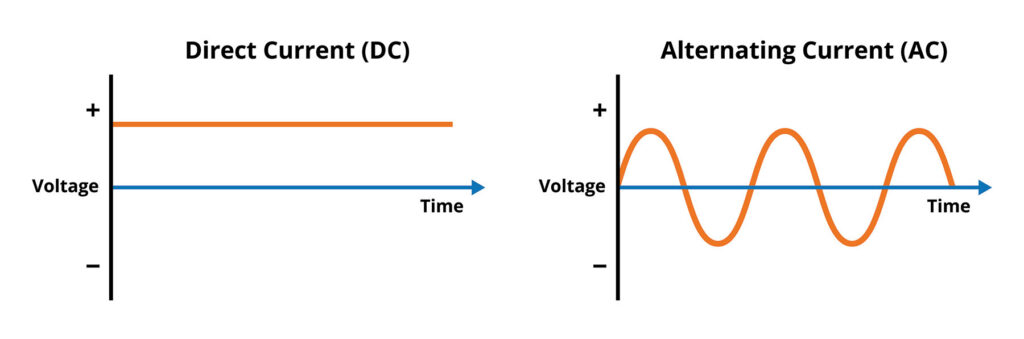
AC power is the type of electricity delivered to your home from the power grid. The electrical current alternates direction many times per second (60 times per second in the U.S.).
This is why it’s called alternating current.
Your outlets, lights, and appliances run on AC electricity supplied by your utility company.
DC Power (Direct Current)
DC power flows in one steady direction. It does not alternate.
Examples of DC power:
- Batteries
- Solar panels
- Electronics
- Many modern motors
Even though your home receives AC electricity, many devices convert AC power into DC power internally because DC motors are more efficient and controllable.
That’s where HVAC systems come in.
AC vs DC Power in HVAC Systems: Do HVAC Units Use AC or DC?
This is one of the most common homeowner questions:
Does my HVAC system use AC or DC power?
The answer is: both.
Here’s how it works:
- Your home receives AC electricity from the grid.
- Older HVAC systems use AC motors directly.
- Modern high-efficiency HVAC systems convert AC power into DC internally.
- DC motors control compressor and blower speed with much greater precision.
So while your house runs on AC electricity, many newer heating and cooling systems actually operate using DC motor technology inside the unit.
AC Motors vs DC Motors in HVAC Equipment
Now let’s compare AC vs DC motors in HVAC systems.
Traditional AC Motor Systems (Older Technology)
Older systems use what’s called a PSC motor (Permanent Split Capacitor).
Characteristics:
- Single speed operation
- Turns fully ON or fully OFF
- Higher startup surge
- Louder operation
- Lower energy efficiency
When the thermostat calls for cooling or heating, the system blasts at 100% until the temperature is reached, then shuts off.
This constant on/off cycling wastes energy and causes temperature swings.
Modern DC Motor Systems (ECM & Inverter Technology)
Modern systems use DC motors, often called ECM motors (Electronically Commutated Motors).
Characteristics:
- Variable-speed operation
- Can ramp up or down
- Quieter
- Much more efficient
- Longer lifespan
Instead of blasting on and off, DC motors adjust their speed gradually.
That difference alone dramatically changes:
- Comfort
- Energy consumption
- Noise levels
- System wear and tear
What Is DC Inverter Technology in HVAC Systems?
You’ve probably heard the term:
Inverter air conditioner
Inverter heat pump
Inverter mini split
So what does inverter technology mean?
In simple terms:
An inverter converts AC power into DC power, then uses advanced electronics to precisely control compressor speed.
Instead of cycling on and off like older systems, inverter-driven systems:
- Start softly
- Adjust output based on demand
- Run continuously at lower speeds
This makes them significantly more energy efficient.
Why DC HVAC Systems Are More Energy Efficient
Let’s break down why DC power in HVAC systems improves efficiency.
1. Reduced Startup Surge
Traditional AC motors draw a large surge of power every time they start.
DC inverter systems start gradually, using much less energy.
2. Continuous Low-Speed Operation
Instead of repeatedly turning off and on, DC systems:
- Maintain temperature steadily
- Run at lower wattage most of the time
- Avoid high energy spikes
3. Higher SEER & HSPF Ratings
Inverter-driven systems often achieve:
- Higher SEER ratings (Seasonal Energy Efficiency Ratio)
- Higher HSPF ratings (Heating Seasonal Performance Factor)
This translates directly to lower monthly utility bills.
4. Less Wear and Tear
Constant cycling wears out:
- Compressors
- Capacitors
- Motors
DC systems operate smoothly and reduce mechanical stress, extending system life.
AC vs DC Power: Noise Differences in HVAC Systems
Another major difference between AC vs DC HVAC systems is sound.
Traditional AC systems:
- Loud startup
- Audible “kick on”
- Noticeable airflow spikes
DC inverter systems:
- Soft startup
- Quieter operation
- Minimal temperature swings
- Smoother airflow
This is why mini splits and inverter heat pumps are often described as “whisper quiet.”
Variable Speed vs Single Speed HVAC Systems
This is where AC vs DC really shows up in homeowner conversations.
Single-Speed (AC Motor)
- Full power or nothing
- Temperature swings
- Higher energy use
Two-Stage
- High or low setting
- Some improvement
- Still not fully variable
Variable-Speed (DC Motor)
- Infinite adjustment range
- Precise comfort control
- Maximum efficiency
If comfort consistency is important to you, DC variable-speed systems win every time.
AC vs DC Power in Mini Split Systems
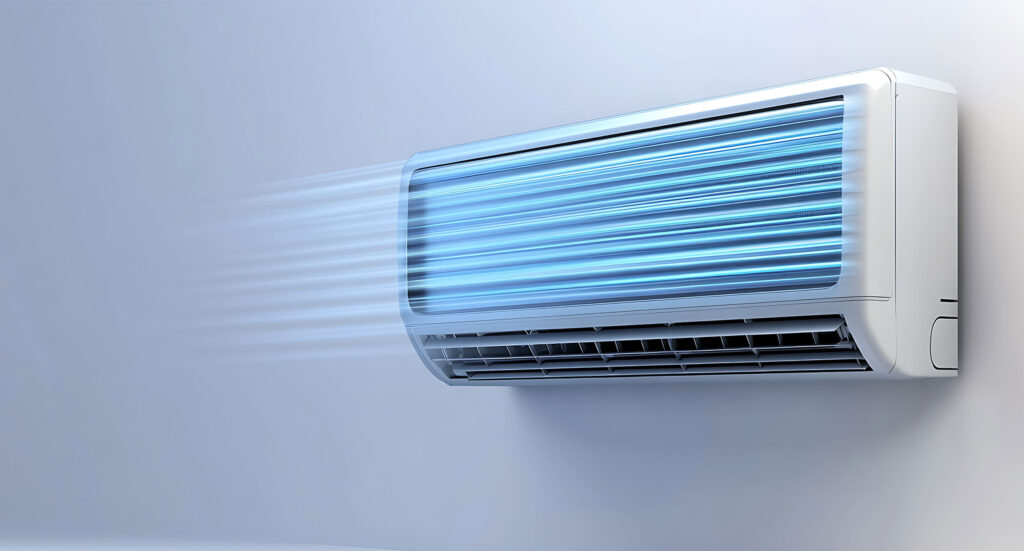
Most ductless mini split systems use DC inverter technology.
That’s why mini splits are:
- Extremely energy efficient
- Quiet
- Great for room-by-room control
- Ideal for solar-powered homes
When homeowners search:
- “Do mini splits use DC power?”
- “Are inverter mini splits better?”
- “Is DC HVAC more efficient?”
The answer is generally yes — especially in modern inverter-driven systems.
Is DC Power Better for Solar Homes?
If you have solar panels or are considering solar installation, DC HVAC systems are particularly attractive.
Why?
Solar panels produce DC electricity.
While conversion still occurs, inverter-based HVAC systems align better with high-efficiency, low-consumption goals.
This makes inverter heat pumps and DC mini splits excellent options for energy-conscious homeowners.
AC vs DC HVAC Systems: Which Is Better?
Now the big question:
Is AC or DC better for HVAC systems?
Here’s a practical breakdown:
Best for Budget:
Traditional AC motor systems (lower upfront cost)
Best for Energy Savings:
DC inverter systems
Best for Comfort:
Variable-speed DC systems
Best for Long-Term Investment:
DC inverter heat pumps or modulating systems
If your goal is lowest upfront price, AC systems may appeal.
If your goal is long-term efficiency, comfort, and lower utility bills, DC systems win.
When Should You Upgrade to a DC Inverter HVAC System?
You may want to consider upgrading if:
- Your system is 10–15+ years old
- Utility bills are increasing
- Rooms feel uneven
- Your system is noisy
- You’re installing solar
- You want better humidity control
Modern inverter systems offer measurable improvements over older AC motor systems.
Does a DC HVAC System Require Special Wiring?
One common question is:
“Does DC HVAC require different wiring in my home?”
No.
Your home still supplies AC power.
The inverter inside the HVAC unit handles AC-to-DC conversion.
Installation is very similar to traditional systems, but the internal technology is more advanced.
Are DC HVAC Systems More Expensive?
Yes, typically.
However:
- Energy savings often offset the higher upfront cost.
- Federal tax credits may apply.
- Local rebates may be available.
- Comfort improvements are significant.
Over 10–15 years, inverter systems often cost less overall.
The Future of HVAC: AC vs DC Power
The HVAC industry is clearly moving toward:
- Variable-speed technology
- Inverter-driven compressors
- ECM blower motors
- Electrification
- Heat pump expansion
DC inverter systems are not a trend — they are the future standard.
Final Thoughts on AC vs DC Power in HVAC Systems
Understanding AC vs DC power in HVAC systems helps you make smarter decisions when upgrading or replacing equipment.
While your home runs on AC electricity, modern HVAC systems increasingly rely on DC inverter technology for:
- Better efficiency
- Lower energy bills
- Quieter operation
- Longer system lifespan
- Improved comfort
If your current HVAC system uses older single-speed AC motor technology, it may be time to explore the benefits of inverter-driven systems.
Ready to Upgrade?
If you’re considering upgrading to a high-efficiency inverter heat pump, ductless mini split, or variable-speed system in Albuquerque or surrounding areas, the team at Nespolo Mechanical can help.
We specialize in modern, energy-efficient HVAC solutions designed for comfort and long-term savings.
📞 Call (505) 226-5855 to schedule a consultation or system evaluation today.